Blockchain Club Lautech Blog
Stay updated with the latest blockchain insights, club news, and educational content from our community.
Could a local ecosystem partner recruit, activate and convert African developers into real builders on BOT Chain? Blockchain LAUTECH set out to answer that question.
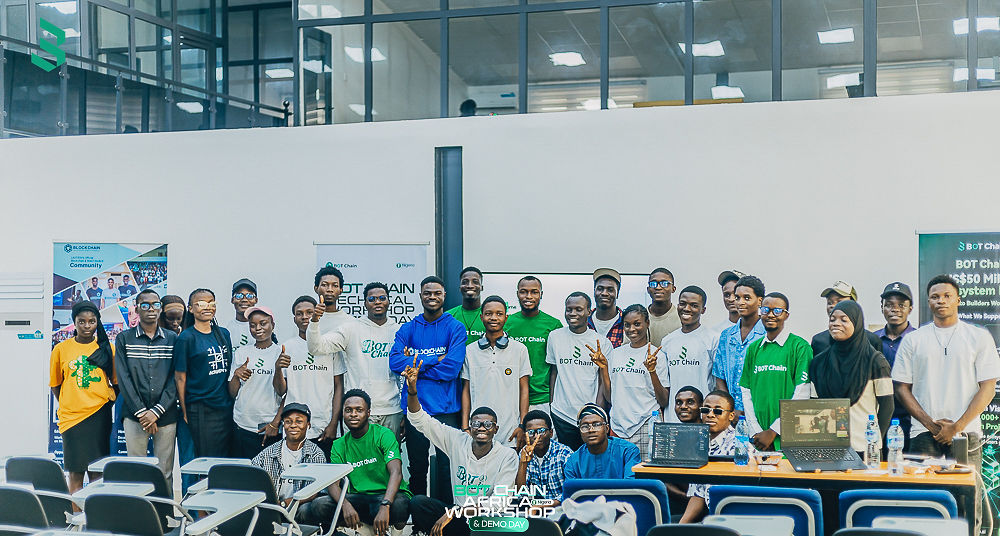
When emerging blockchain ecosystems enter a new region, the biggest challenge isn't getting people to hear about them.
It's getting developers to actually build.
For BOT Chain, an EVM-compatible Layer 1 focused on emerging applications across AI, DePIN, RWA and other real-world use cases, the question was straightforward:
Could a local ecosystem partner recruit, activate and convert African developers into real builders on BOT Chain?
Blockchain LAUTECH set out to answer that question.
The result was the BOT Chain Africa Builder Challenge - a 15-day developer pilot that brought together 125 builders, generated 100 project registrations, supported six technical office hours, and ultimately produced 32 projects deployed on BOT Chain Mainnet across 64 contracts.
And that was just the beginning.

Blockchain ecosystems often measure growth through registrations, social media followers and community size.
But these metrics don't necessarily translate into ecosystem activity.
For developers, the journey is much more meaningful:
Discover → Learn → Build → Deploy → Launch → Grow
BOT Chain wanted to test this journey in Africa, beginning with Nigeria's developer ecosystem.
Blockchain LAUTECH was selected as the local ecosystem partner because of its existing relationships with developers, university communities and Web3 builders across Nigeria.
The objective wasn't simply to organize another workshop.
It was to create a developer conversion pipeline that could move participants from awareness to actual Mainnet deployment.
The BOT Chain Africa Builder Challenge officially kicked off on August 1, 2026.
The program combined:
Developer recruitment
Technical onboarding
An in-person technical workshop
A 15-day building sprint
Technical office hours
Mainnet deployment support
Project submissions
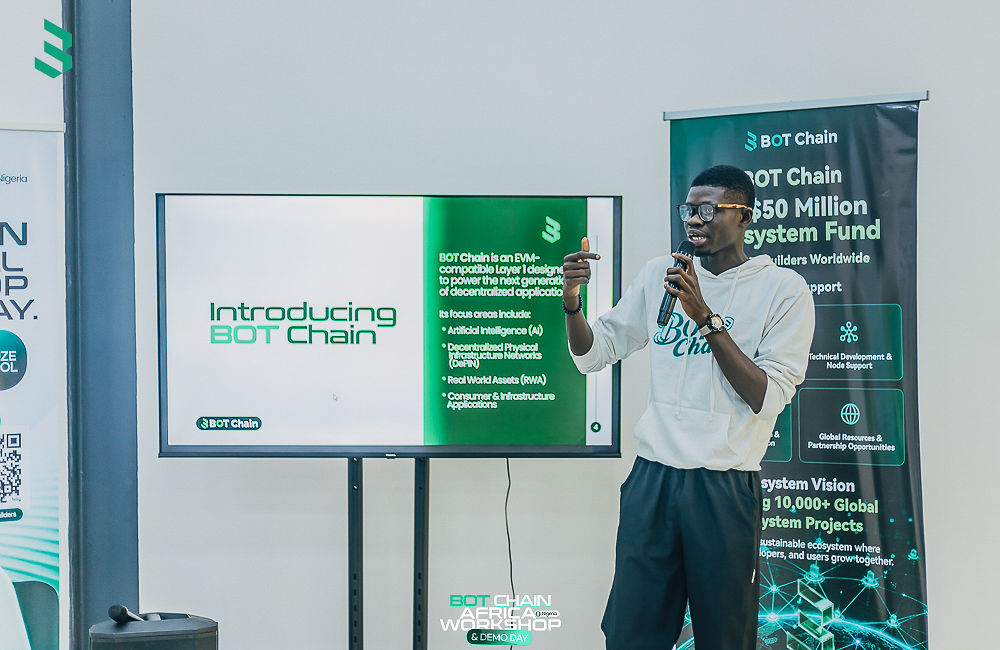
The structure was intentionally lightweight.
Rather than running a long accelerator or mentorship program, the pilot focused on one question:
Can developers be introduced to BOT Chain and successfully ship real projects on Mainnet within a short, structured sprint?
The first stage was developer acquisition.
Through Blockchain LAUTECH's existing ecosystem network and outreach channels, the challenge attracted:
and
into the program's community.
But the interesting part wasn't just the number of registrations.
We wanted to understand where the builders were coming from.
Among the projects that eventually deployed on Mainnet:
62.5% discovered the challenge through Blockchain LAUTECH
15.6% came through friends or referrals
15.6% discovered it through BOT Chain's X account
3.1% came through BOT Chain Telegram
3.1% came through other sources
This demonstrated the value of a strong local ecosystem partner.
Blockchain LAUTECH's network wasn't simply useful for promoting the challenge.
It became a significant developer distribution layer for BOT Chain in Nigeria.
This was the most important part of the pilot.
We didn't want participants to simply attend a workshop, join a group chat and disappear.
The target was deployment.
During the challenge:
And ultimately:
Across these projects, a total of:
That means the pilot generated an average of two Mainnet contracts per deployed project.
More importantly, the projects weren't simply existing BOT Chain applications being brought into the program.
One of the strongest results from the challenge was the proportion of new products created specifically for the program.
Of the 32 Mainnet projects:
were new projects built specifically for the BOT Chain Africa Builder Challenge.
were existing projects built outside BOT Chain that were migrated or expanded onto the network.
were existing prototypes that underwent substantial development during the challenge.
This means the pilot achieved both sides of ecosystem acquisition:
New project creation + existing project migration.
For an emerging ecosystem, both are valuable.
One of the most interesting aspects of the challenge was the diversity of applications.
The strongest concentration was around AI.
This was followed by:
25% — RWA
6.3% — DePIN
But the applications weren't limited to those categories.
Projects could select multiple categories, so these figures overlap.
For example, a project could simultaneously be an AI application, incorporate payments and function as developer infrastructure.
This overlap revealed something particularly interesting:
Builders aren't thinking in isolated categories.
They're combining AI, payments, infrastructure, RWA and other technologies to create applications around actual use cases.
A major part of the pilot was ensuring that builders weren't left alone after the initial workshop.
Throughout the challenge, we facilitated:
These sessions provided builders with opportunities to:
Ask technical questions
Resolve implementation challenges
Understand BOT Chain's infrastructure
Get deployment guidance
Progress their projects toward Mainnet
Blockchain LAUTECH's local execution team worked alongside BOT Chain's technical resources to create a bridge between the builders and the global BOT Chain ecosystem.
The challenge concluded with a hybrid Demo Day.
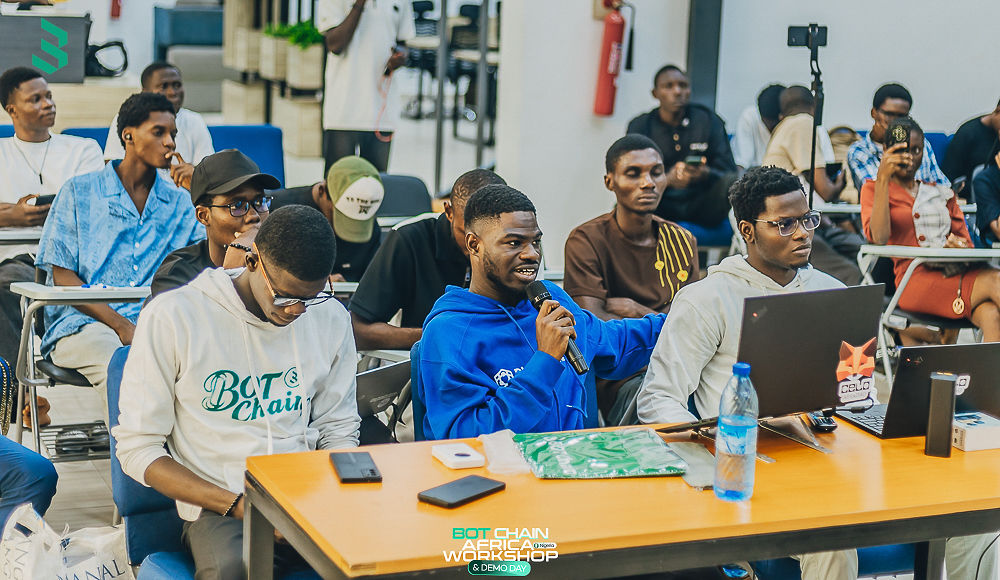
From the projects submitted:
The physical event brought together:
For participants who couldn't attend physically, we provided a virtual participation option.
More than:
with several remote builders also presenting their projects.
The Demo Day was streamed publicly through Blockchain LAUTECH's X account, generating:
This gave the participating builders an opportunity to showcase their work beyond the immediate room and created additional visibility for BOT Chain's developer ecosystem in Africa.
The pilot provided several important insights about developer ecosystem growth.
More than 60% of the projects that reached Mainnet discovered the challenge through Blockchain LAUTECH.
This demonstrates that emerging ecosystems can significantly accelerate regional growth by working with trusted local ecosystem partners who already have relationships with developers.
Getting 100 registrations sounds impressive.
But the more important number is 32 Mainnet projects.
The real value of an ecosystem program comes from what happens after developers sign up.
The pilot reinforced our belief that successful developer programs should be designed around conversion, not just participation.
AI was the dominant category, appearing in 65.6% of deployed projects.
RWA, DePIN, payments and infrastructure also attracted significant interest.
This suggests that developer programs built around specific emerging technology narratives can be powerful entry points for ecosystem growth.
The challenge ran for just 15 days.
Within that period, developers moved from:
Idea → Development → Mainnet → Demo
That doesn't mean every project is production-ready after 10 days.
But it demonstrates that a focused sprint, combined with technical support and clear deployment targets, can create meaningful ecosystem activity in a relatively short period.
The BOT Chain Africa Builder Challenge was more than a hackathon.
It was an experiment in regional developer ecosystem activation.
And the experiment produced a clear result:
A strong local ecosystem network can convert awareness of an emerging blockchain into measurable developer activity and Mainnet deployments.
In 15 days, the pilot produced:
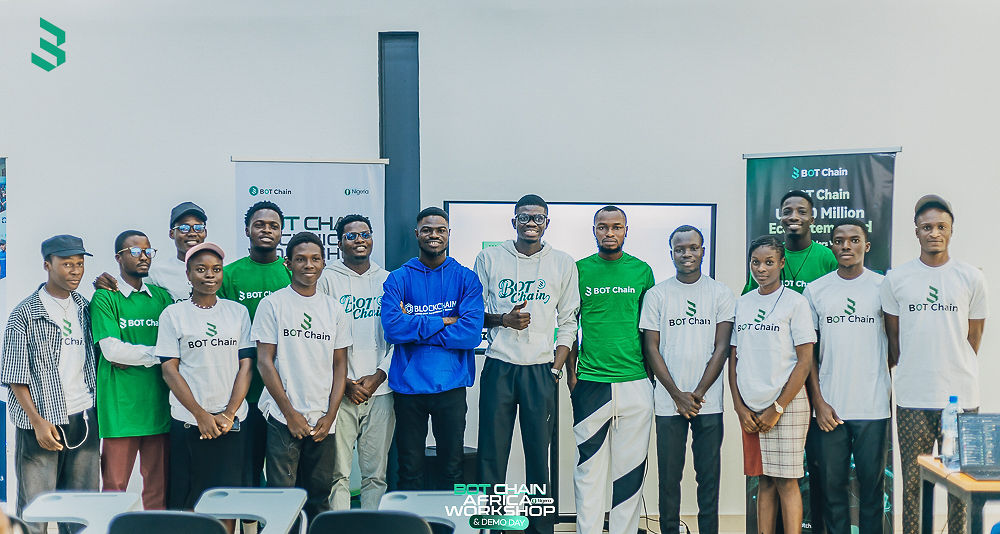
For us at Blockchain LAUTECH, the conclusion of the Builder Challenge isn't the end.
It's a starting point.
The strongest projects from the challenge now have an opportunity to continue developing, growing their products and exploring the broader BOT Chain ecosystem.
For Blockchain LAUTECH, the pilot also reinforces something we've believed for years:
Africa doesn't just need to be a market for global blockchain ecosystems.
Africa can be a place where those ecosystems are built.
The developers are here.
The ideas are here.
The communities are here.
What matters now is creating the infrastructure, opportunities and partnerships that allow them to ship.
The BOT Chain Africa Builder Challenge started with a simple question:
Can we get African developers to build on BOT Chain?
Fifteen days later, the answer wasn't a registration number.
It was 32 Mainnet projects and 64 deployed contracts.
And we're only getting started.